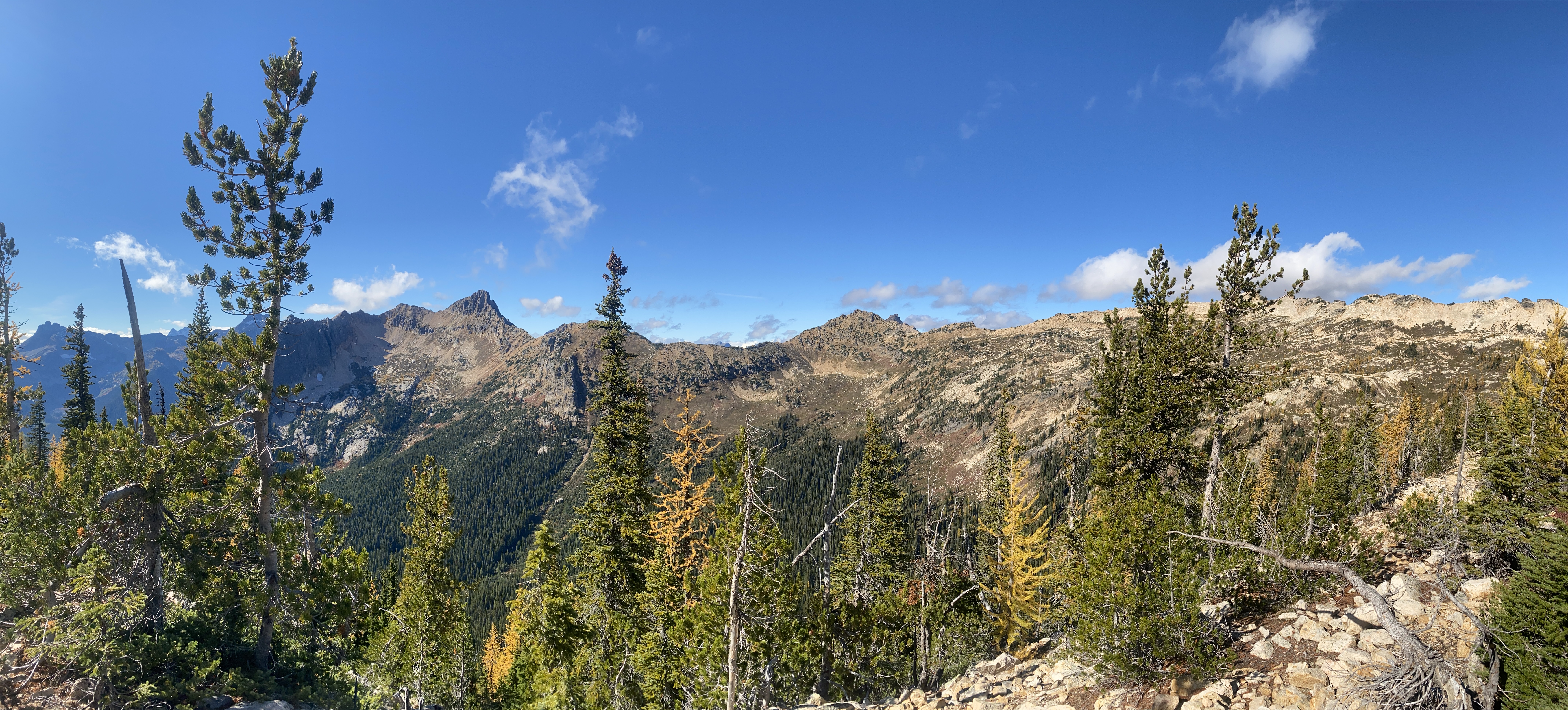
Raising awareness about Whitebark Pine (Pinus albicaulis) and contributing data to further our understanding of an imperiled ecosystem.
Whitebark Pine
Whitebark pine (Pinus albicaulis), a high-elevation tree species found across western North America, was recently listed by the U.S. Fish and Wildlife Service as threatened species under the Endangered Species Act (ESA).
Whitebark pine is a keystone species in the upper montane and subalpine areas where it occurs, meaning other species in an ecosystem largely depend on it, to such a degree that if it were removed the ecosystem would change drastically. The threats to whitebark pine are many, and include white pine blister rust, mountain pine beetle, climate change, and wildfire.
How you can help
Two ways that you can help are becoming a member and donating to the Whitebark Pine Ecosystem Foundation, and joining and contributing observations and identifications to the Whitebark Pine iNaturalist Project and/or the 5-Needle Pines along the Pacific Crest Trail Project. See below for additional details, including:
- Best practices for documenting whitebark pine
- Best practices for uploading observations to iNaturalist
- Representative photos of whitebark pine
- An identification guide to the 5 needle pines of western North America
- Mapping Whitebark Pine using Citizen-Science Data: A Pilot Study
- Five-needle Pine Monitoring Citizen Science Monitoring Pilot Study
- The Project Kick-off Webinar for the 5-Needle Pines along the Pacific Crest Trail Project
Whitebark Pine Ecosystem Foundation

The Whitebark Pine Ecosystem Foundation (WPEF) is a non-profit, science-based organization working to restore and preserve the whitebark pine and to educate the public on its valuable ecosystem.
The Nutcracker Ecosystem Project
Whitebark pine has a mutualistic relationship with Clark’s Nutcracker (Nucifraga columbiana), a bird that depends on the seeds of whitebark pine as a major food source and which plays a vital role in dispersing whitebark pine seeds across the landscape. Clark’s Nutcrackers disperse tens of thousands of seeds per year, and move them up to 20 miles from the parent tree where they store them in small caches.The seeds that the nutcrackers don’t eat sprout into new trees.
The Nutcracker Ecosystem Project is collaborative research with the goal of understanding and enhancing the stability and resilience of the Clark’s nutcracker-whitebark pine keystone mutualism.
Since 2009, Dr. Taza Schaming has been studying the impact of whitebark pine mortality on Clark’s Nutcracker demography and habitat use. The project has expanded from the Greater Yellowstone Ecosystem into Washington’s Cascade Range in 2018. Learn more about The Nutcracker Ecosystem Project and donate here: http://www.thenutcrackerecosystemproject.com/
Whitebark Pine iNaturalist Project
This is a citizen-science project to 1) raise awareness about whitebark pine, and 2) contribute data to ongoing and future whitebark pine research.
Contribute observations and provide identifications on iNaturalist here: https://www.inaturalist.org/projects/the-whitebark-pine-project
We need people to contribute observations, make identifications, and add data to existing observations. If you really want to make your observations count, follow the best practices below.
Best Practices
Documenting Observations
When making observations of whitebark pine in the field please:
- Needles: Make note and take pictures of the number of needles per fascicle, i.e., the bundles of needles on the branches (Figure 1),
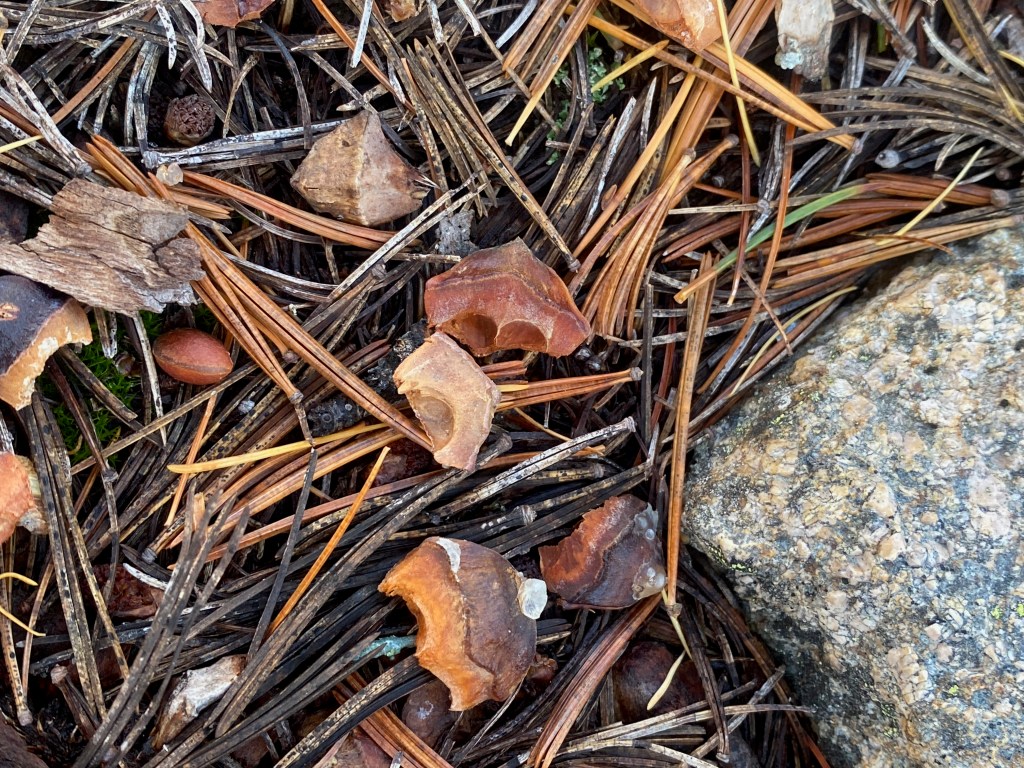
- Cones: Look for cones in the tree or cones or cones fragments on the ground around the tree and take pictures (Figures 2-6), and
- Pests/Damage/Disease: Take pictures and make note of any recent damage to the tree, or signs of disease or pests (Figures 7-9).
- Entire tree: Take photos of the entire tree.
- Branches: Take closeup photos of the branches.
- Trunk: Take a photos of the trunk of the tree.
- Bark: Take closeup photos of the bark.
- Wildlife: make note and take photos of wildlife observations (e.g., Clarks nutcracker interacting with the whitebark pine being observed)
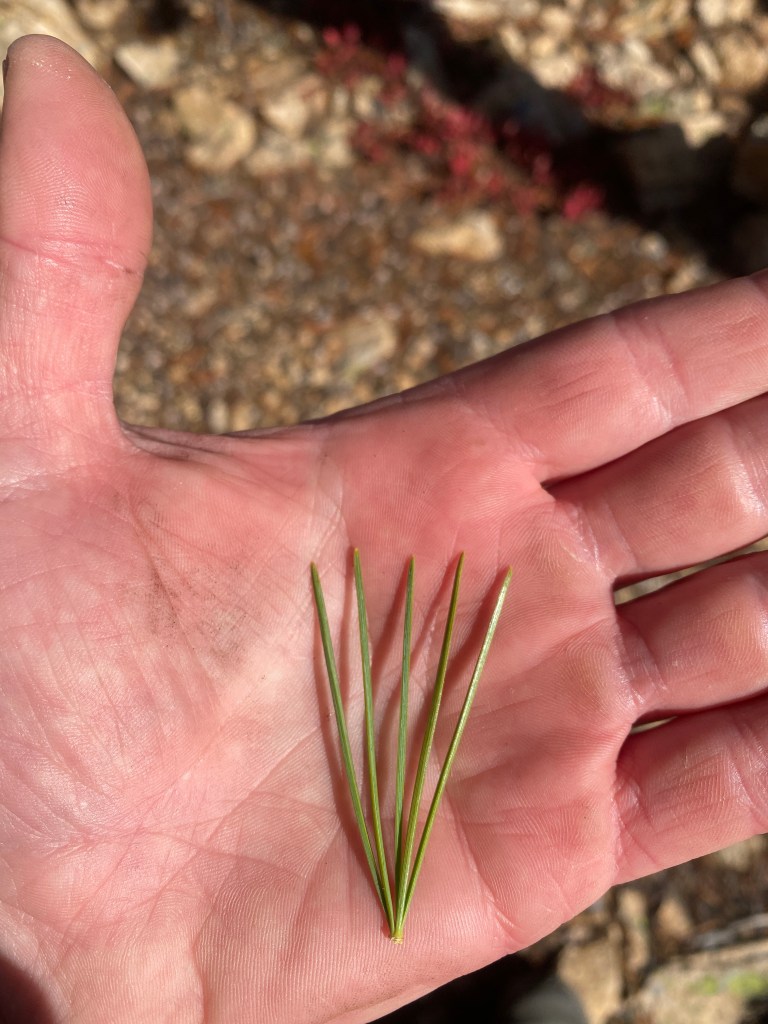
Figure 1. A photo clearly showing 5 needles per fascicle.
Uploading Observations to iNaturalist
When uploading observations of whitebark pine to iNaturalist please upload all the photos described above, and add the following Observation Fields:
- Needles/fascicle (integer): enter the number of needles per fascicle. If you can’t tell from the photos, then leave this blank.
- Cones shown? (text): Are there cones or cone fragments shown in the photos? Enter yes, no, possibly
- Pest/disease (text): Was there evidence of pests or disease affecting the whitebark pine under observation? If no then enter “none”; if you aren’t sure enter “unknown”, and if yes then enter the common name of the pest or disease (e.g., mountain pine beetle, white pine blister rust, top kill).
- Wildlife (text): For wildlife use the “Wildlife” observation field. This is a free-form text field, enter the common name (e.g., Clark’s Nutcracker) of the wildlife species observed interacting with the whitebark pine tree being observed. Not that if you observe wildlife interacting with the tree being observed then you should submit a separate observation of the wildlife species to iNaturalist.
**Photos on this page are by Aaron Wells unless otherwise noted.
Representative Photos of Whitebark Pine
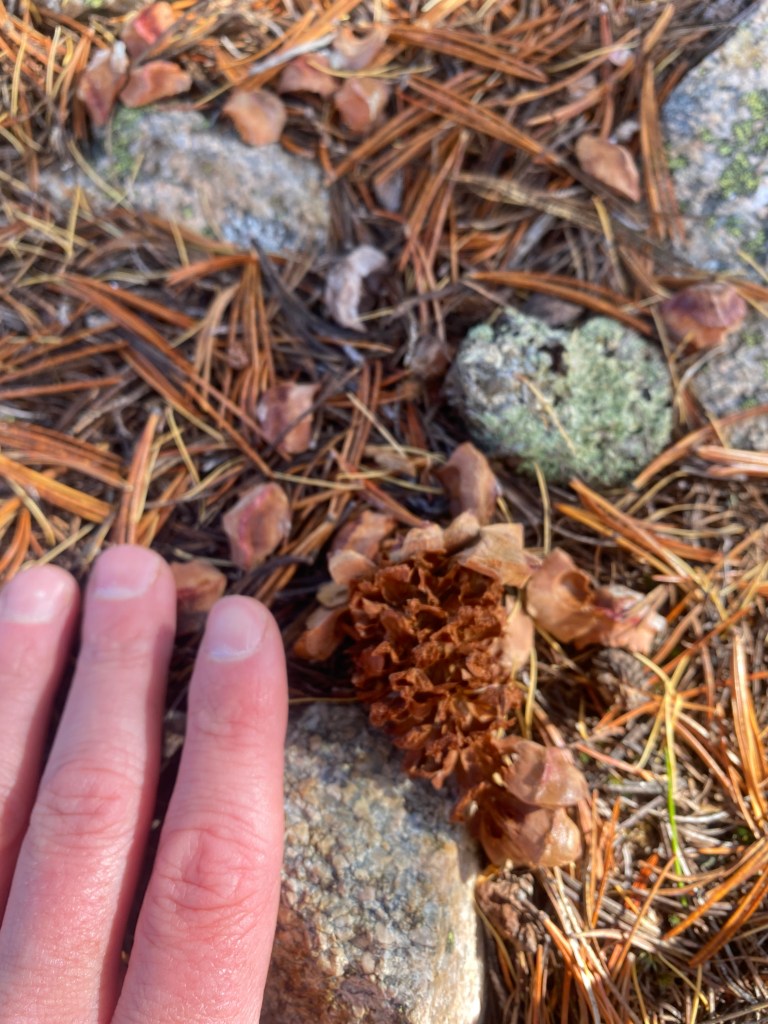
Figure 2. A photo showing the remains of a whitebark pine cone and scattered cone scales.




Stay tuned, there’s more to come soon on The Whitebark Pine Project!
Stay Informed
Contact us and stay informed about The Whitebark Pine Project.
 Elfinwood Ecology